
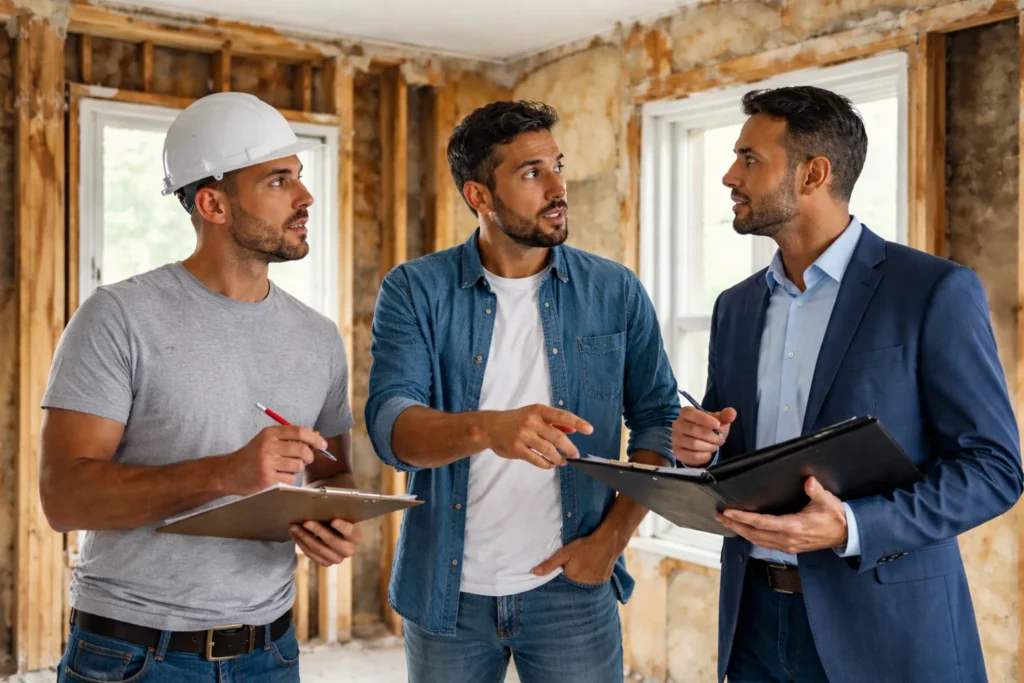
Property damage turns life upside down fast. One day everything is normal, and the next you are staring at roof damage, soaked drywall, or a house that suddenly needs major repairs. In that moment, homeowners start calling professionals for help. Contractors arrive to inspect the damage. Public adjusters offer to review the insurance claim. And naturally, a question comes up: can a public adjuster work for a contractor?
It’s a smart question. The answer affects how your insurance claim is handled, who represents your interests, and whether the process stays fair and legal. Understanding the relationship between contractors and public adjusters is critical if you want the best outcome for your claim. I’ve seen homeowners rush into agreements during stressful situations, only to discover later that the roles between professionals were blurred. Let’s break this down clearly. What does each professional do? Why do laws keep their roles separate? And most importantly, what should homeowners in Edinburg know before signing any agreement?
What a Public Adjuster Actually Does
When homeowners file an insurance claim, the insurance company sends its own adjuster to inspect the damage. That adjuster works for the insurer. A public adjuster, on the other hand, works exclusively for the policyholder. Their job is simple in concept but complex in execution: advocate for the homeowner during the insurance claim. Public adjusters evaluate the damage, review the insurance policy, and negotiate with the insurance company to reach a fair settlement.
Key Responsibilities of a Public Adjuster
A public adjuster’s role includes several important tasks:
- Reviewing the homeowner’s insurance policy
- Inspecting and documenting property damage
- Preparing detailed repair estimates
- Filing claim documentation
- Negotiating with insurance companies
- Ensuring the claim reflects the full scope of damage
In many cases, homeowners hire a public adjuster when a claim becomes complicated or when the damage is significant. The process of analyzing damage and claim documentation can be very systematic, sometimes resembling detailed evaluation frameworks used in fields like Bayesian inference, where evidence is carefully weighed before reaching a conclusion.
How Public Adjusters Get Paid
Most public adjusters operate on a contingency basis. That means they are paid a percentage of the insurance settlement. This structure creates a strong incentive for them to pursue the highest legitimate claim value for the homeowner.
Typical payment structure:
| Payment Type | Description |
| Contingency Fee | Percentage of claim settlement |
| Paid After Settlement | No payment unless the claim is paid |
| Percentage Range | Often 5%–15% depending on claim size |
Because of this arrangement, public adjusters focus heavily on documentation and negotiation.
What Contractors Do During Property Repairs
While public adjusters focus on the insurance claim, contractors focus on rebuilding and repairing the property. After a storm, fire, or water damage event, contractors step in to restore the structure. Their work is physical and construction-based.
Common tasks contractors handle include:
- Roof replacement
- Structural repairs
- Drywall replacement
- Flooring restoration
- Water damage mitigation
- Fire damage rebuilding
In short, contractors fix the damage.
Types of Contractors Involved in Insurance Repairs
Property damage claims often involve several different specialists.
Common contractors include:
- Roofing contractors
- Water restoration companies
- Fire damage restoration teams
- Mold remediation specialists
- General contractors
Each one may provide repair estimates that help determine the cost of restoring the home. But here’s where confusion sometimes begins. Contractors often discuss insurance claims with homeowners, and some may suggest working closely with adjusters. That leads to the important question again: can a public adjuster work for a contractor?
Can a Public Adjuster Work for a Contractor?
The short answer is no in most situations. In many states, including Texas, laws and professional regulations prevent public adjusters from working directly for contractors or entering business arrangements that create conflicts of interest. So if you’re asking can a public adjuster work for a contractor, the general rule is that the two professionals must remain independent.
Why the Separation Exists
Insurance claims involve large financial decisions. When one person controls both the claim negotiation and the repair work, the potential for abuse increases. Separating roles protects homeowners.
Here are the main reasons laws enforce this separation:
- Prevent inflated claim estimates
- Avoid financial kickbacks between professionals
- Ensure unbiased claim representation
- Maintain transparency during negotiations
Public adjusters must act in the best interest of the homeowner, not a construction company.
Texas Rules for Public Adjusters
Texas has strict guidelines governing the behavior of licensed public adjusters. These rules are designed to prevent conflicts between contractors and adjusters.
Key principles include:
- Public adjusters represent only the insured policyholder
- Adjusters cannot receive compensation from contractors
- Adjusters cannot steer repair work for financial gain
- Licensing requirements must be maintained
This is why the question can a public adjuster work for a contractor usually has a clear answer: the relationship must stay separate. Violations can lead to serious consequences.
Possible penalties include:
- License suspension
- Fines
- Legal action
- Loss of professional credentials
The goal is simple: protect the homeowner.
Why Contractors and Public Adjusters Must Stay Independent
Let’s imagine a situation where a contractor hires a public adjuster to handle claims for their repair jobs. At first glance, it might seem convenient. One team handles everything. But that structure can quickly create a conflict of interest.
Example Scenario
A contractor wants to maximize repair work. The public adjuster negotiates the claim amount. If both are financially linked, there is a risk that claim estimates may be inflated to increase repair contracts. That’s exactly what regulations aim to prevent.
Independent Roles Create Accountability
When professionals remain independent, each one provides checks and balances.
| Professional | Primary Responsibility |
| Public Adjuster | Insurance claim negotiation |
| Contractor | Property repairs |
| Insurance Adjuster | Claim review for insurer |
This structure protects homeowners from unfair practices.
How Contractors and Public Adjusters Still Work Together
Although they cannot operate under the same business arrangement, contractors and public adjusters often interact during claims. They simply maintain separate roles.
The Typical Claim Timeline
- Property damage occurs
- Homeowner contacts insurance company
- Public adjuster evaluates the claim
- Contractor provides repair estimates
- Insurance company reviews documentation
- Claim settlement is negotiated
- Contractor completes repairs
Notice something important. Each professional participates, but their responsibilities remain separate.
Healthy Collaboration Without Conflict
Public adjusters may review contractor estimates to support negotiations. Contractors may explain repair needs to adjusters. But financial relationships must remain independent. No referral payments. No joint contracts. Just professional cooperation.
Warning Signs of an Improper Adjuster-Contractor Relationship
Homeowners should stay alert during the claims process. Some arrangements can signal illegal or unethical practices. Watch for these red flags.
Major Warning Signs
- A contractor offering to handle the insurance claim directly
- One contract covering both adjusting and repair services
- Pressure to sign documents immediately
- Adjuster promising repair work through their company
- Referral incentives between contractors and adjusters
If any of these situations occur, pause and ask questions. Remember the central issue: can a public adjuster work for a contractor? If someone suggests they do, that deserves closer scrutiny.
Benefits of Hiring an Independent Public Adjuster
When the roles remain separate, homeowners gain several advantages.
An independent public adjuster focuses entirely on maximizing the insurance claim.
Key Benefits
1. Stronger Claim Documentation
Public adjusters often produce detailed damage reports that support higher settlements.
2. Professional Negotiation
Insurance companies handle thousands of claims. Experienced adjusters know how to navigate that system.
3. Reduced Stress
Homeowners don’t need to manage endless phone calls with insurance representatives.
4. More Accurate Settlement Values
Independent evaluations ensure hidden damage is included in the claim. Many homeowners feel relief simply knowing someone is advocating for them.
How to Choose a Public Adjuster in Edinburg
Finding the right professional matters just as much as understanding the rules about contractor relationships. Here are practical steps homeowners should take.
Verify Licensing
Always confirm that the adjuster holds a valid Texas license.
Review Experience
Look for professionals who have handled claims involving:
- storm damage
- hail damage
- fire damage
- water damage
Ask Direct Questions
You should feel comfortable asking:
- Do you work independently from contractors?
- What percentage fee do you charge?
- How many claims have you handled?
- Will you personally negotiate with the insurer?
Evaluate Communication Style
Claims can last weeks or months. Choose someone who explains things clearly.
Questions Homeowners Should Ask Before Hiring
Before signing any agreement, ask a few simple questions. These questions protect your interests.
Important questions include:
- Are you licensed in Texas?
- Do you have financial relationships with contractors?
- How is your fee calculated?
- How long does the claims process usually take?
- Will you manage all communication with the insurance company?
The answers should be clear and transparent. If someone avoids these questions, consider looking elsewhere.
How Edinburg Public Adjuster Supports Local Homeowners
Property damage in South Texas often comes from storms, hail, and water intrusion. Local knowledge matters when evaluating claims. Professionals familiar with the region understand common structural issues, insurance practices, and local construction costs. Edinburg Public Adjuster focuses on helping homeowners navigate the claims process step by step.
Services often include:
- Damage inspections
- Policy review
- Claim documentation
- Negotiation with insurers
- Settlement support
The goal is simple: ensure homeowners receive the compensation needed to properly restore their property.
Conclusion
After property damage, homeowners face a complicated process. Contractors repair structures. Insurance companies evaluate claims. Public adjusters negotiate settlements. But their roles must remain clearly defined. So can a public adjuster work for a contractor? In most cases, the answer is no. Laws and professional standards require public adjusters to remain independent so they can represent homeowners without conflicts of interest.
That separation protects you. Independent adjusters focus on the claim. Contractors focus on rebuilding. Each professional plays an important role in helping homeowners recover after a disaster. When these roles stay separate, the process stays fair, transparent, and focused on restoring your home properly. And that’s exactly what homeowners deserve.
FAQs
No. In most cases, public adjusters must remain independent and cannot work for contractors or share financial arrangements that create conflicts of interest.
The separation prevents conflicts of interest and ensures the adjuster represents the homeowner’s insurance claim fairly.
A contractor may suggest an adjuster, but they should not receive referral fees or have financial ties with that adjuster.
In most states, including Texas, professionals cannot act as both on the same claim because it creates a conflict between negotiating the claim and performing repairs.
A public adjuster represents the homeowner or policyholder, not the insurance company.
Homeowners often hire a public adjuster when the damage is significant, the claim is complex, or they believe the insurance settlement is too low.
No. Public adjusters focus on claim documentation and negotiation, while contractors handle the physical repair work.
Most public adjusters work on a contingency fee, meaning they receive a percentage of the insurance settlement.
This can be a red flag, as contractors are generally not licensed to negotiate insurance claims on behalf of homeowners.
Homeowners should confirm the adjuster is licensed in their state, review their experience, and carefully read the service contract before signing.